
Every year, millions of Spaniards file their income tax return (Declaración de la Renta), and many come face to face with the tax allocation box. Surprisingly, 32% leave it blank despite their discontent with the government, even though ticking it doesn’t affect your refund and can direct money to social causes. As the joke goes: “Those who rush to tick the church box have no paSCIENCE”.
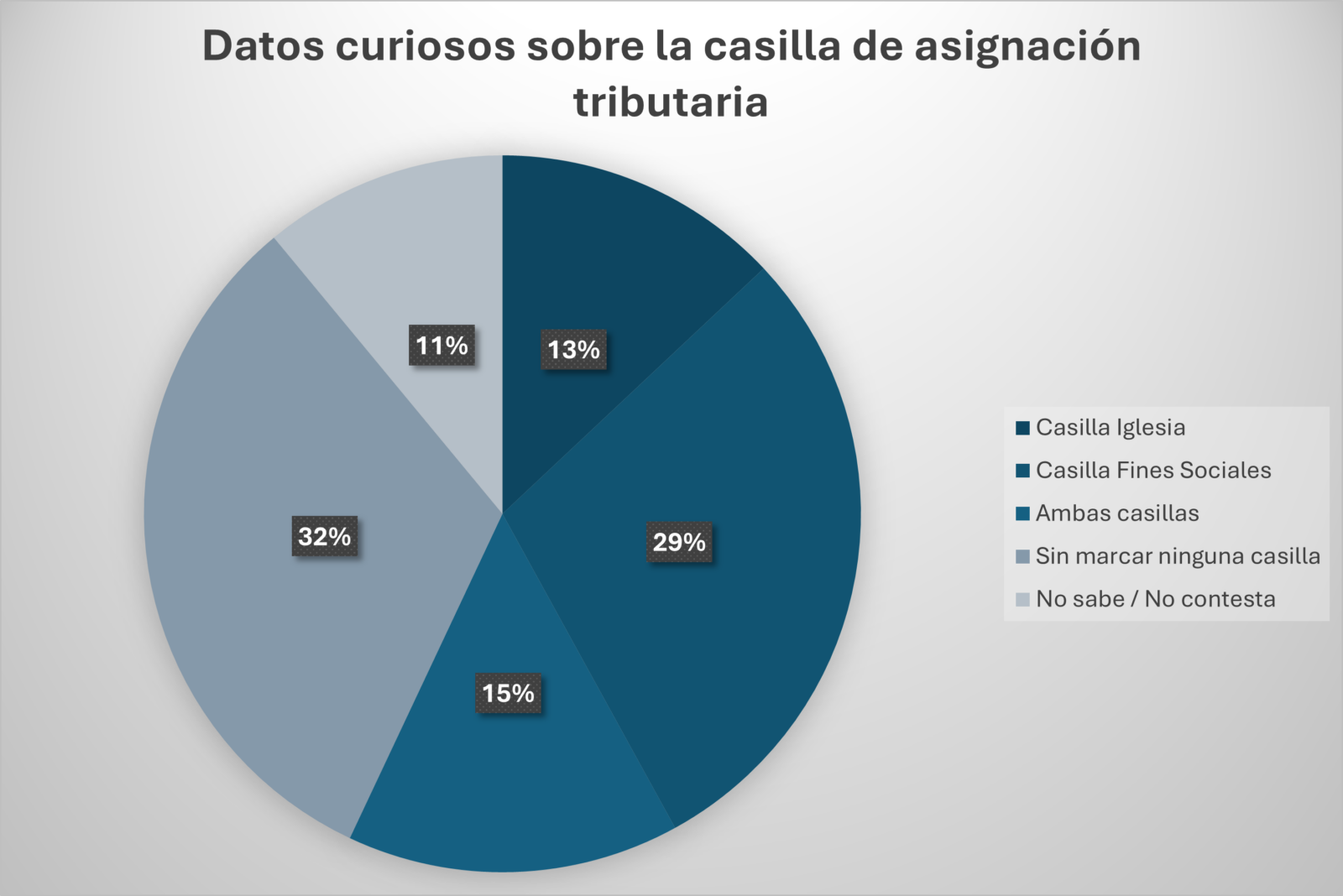
Curious facts about the tax allocation box
- Church box: ticked by ~13%
- Social Causes box: ticked by ~29%
- Both boxes: ~15%
- Neither box ticked: ~32%
- Don’t know / No answer: ~11%
(Source: CIS)
If we add up everything raised just from the Social Causes box, we’re talking about more than 500 million euros a year going directly to NGOs and social projects. (EAPN)
Who leaves the tax allocation box blank?
Although many Spaniards consider themselves believers or socially minded, and could tick one of the boxes, the reality is surprising:
- ~55% identify as Catholic
- ~39% consider themselves non-believers (Wikipedia)
- 32% of taxpayers leave both boxes blank (El Debate)
Curious, right? Believers and socially minded people who tick nothing, while others actively support social causes or the Church. What’s going on here?
Political discontent comes into play
Many citizens are frustrated with politicians and the administration:
- Only 18% trust political parties (OECD)
- Trust in the central government: 37% (OECD)
- 68% think democracy works “so-so or badly” (La Vanguardia)
This discontent lowers many people’s motivation to do something as simple as ticking a box, even though it doesn’t affect their money or their tax return.
Explained through the Fogg model
BJ Fogg’s Behavior Model explains that for a behavior to occur, three factors must come together:
- Motivation: the desire to take the action
- Ability: how easy it is to do
- Trigger: a prompt that activates the action
How it works with the tax allocation box
| Element | Influence |
|---|---|
| Motivation | Believers and socially minded people could tick a box, but distrust in the government reduces their effective motivation. |
| Ability | Ticking the box is quick and easy. |
| Trigger | Few campaigns or reminders connect the action with its real impact. |
Curious facts to keep you engaged
- If you tick the Social Causes box, your 0.7% of personal income tax (IRPF) could help fund more than 500 social projects a year. (EAPN)
- If you tick both boxes, you direct 1.4% of your IRPF to causes chosen by you.
- More than one in three Spaniards opts for tax inaction as a “mini act of rebellion” without even knowing it.
- Curious fact: although the Church receives money from IRPF, most of it comes from those who choose to tick the box voluntarily.
Final reflection
The 32% who leave the boxes blank show us:
- Political distrust: apathy reflects discontent with the administration.
- Insufficient motivation: beliefs and solidarity aren’t enough without a trigger.
- A missed opportunity: your 0.7% could fund social or religious causes of your choice.
In short, the tax return isn’t just paperwork: it’s a mini laboratory of citizen behavior. And the moral is clear: “Those who rush to tick the church box have no paSCIENCE”, but those who leave the box blank are revealing a lot about their relationship with politics and society.


Explore more content on Behavioral Design
Frequently Asked Questions about the Tax Allocation Box
If you need more context on the tax allocation box, check out these frequently asked questions:
Will I pay more or get a smaller refund if I tick a box?
No. Ticking the Church box, the Social Causes box, or both doesn’t change the result of your tax return. The 0.7% (or 1.4% if you tick both) is taken from the gross tax liability that the State already collects. If you leave it blank, that money simply stays in the State’s general coffers.
What happens if I leave both boxes blank?
If you don’t tick either option, like the 32% of Spaniards who do so, the full amount of your tax allocation goes to the General State Budget. In that case, how those funds are used is decided directly by the government of the day, with no earmarked allocation to NGOs or religious organizations.
Can I tick the Church box and the Social Causes box at the same time?
Yes, it’s completely possible and compatible. By doing so, you’ll be allocating 1.4% of your IRPF (0.7% to each) to be distributed between both causes. It’s a way to maximize the social impact of your taxes without it costing you a single extra euro.
Why do so many taxpayers leave the box blank, according to Behavioral Design?
According to the Fogg Model, a behavior doesn’t occur when motivation or ability is lacking. Although ticking the box is very easy (high ability), institutional distrust and the lack of clear visual triggers during the tax filing process lead many to opt for inaction as an unconscious act of political discontent.
Where do the funds from the Social Causes box (X Solidaria) go?
The money raised goes to grants for NGO projects that help older people, people with disabilities, children, families at risk of exclusion, and international cooperation. In Spain, this amounts to annual revenue of over 500 million euros thanks to the sum of individual decisions.