
Discover how the Hook Model (the habit-formation cycle created by Nir Eyal) works and learn to apply it ethically in digital products to maximize user retention and engagement.
What Is the Hook Model?
The Hook Model is a conceptual framework developed by Nir Eyal in his book “Hooked: How to Build Habit-Forming Products”. It describes a four-phase cycle designed specifically to structure digital experiences that connect a user’s internal needs with a platform’s solution, turning use of the product into an unconscious habit.
Unlike traditional traffic acquisition (focused on the short term), the Hook Model directly targets long-term retention and Lifetime Value (LTV), fundamental pillars of any advanced Growth strategy.
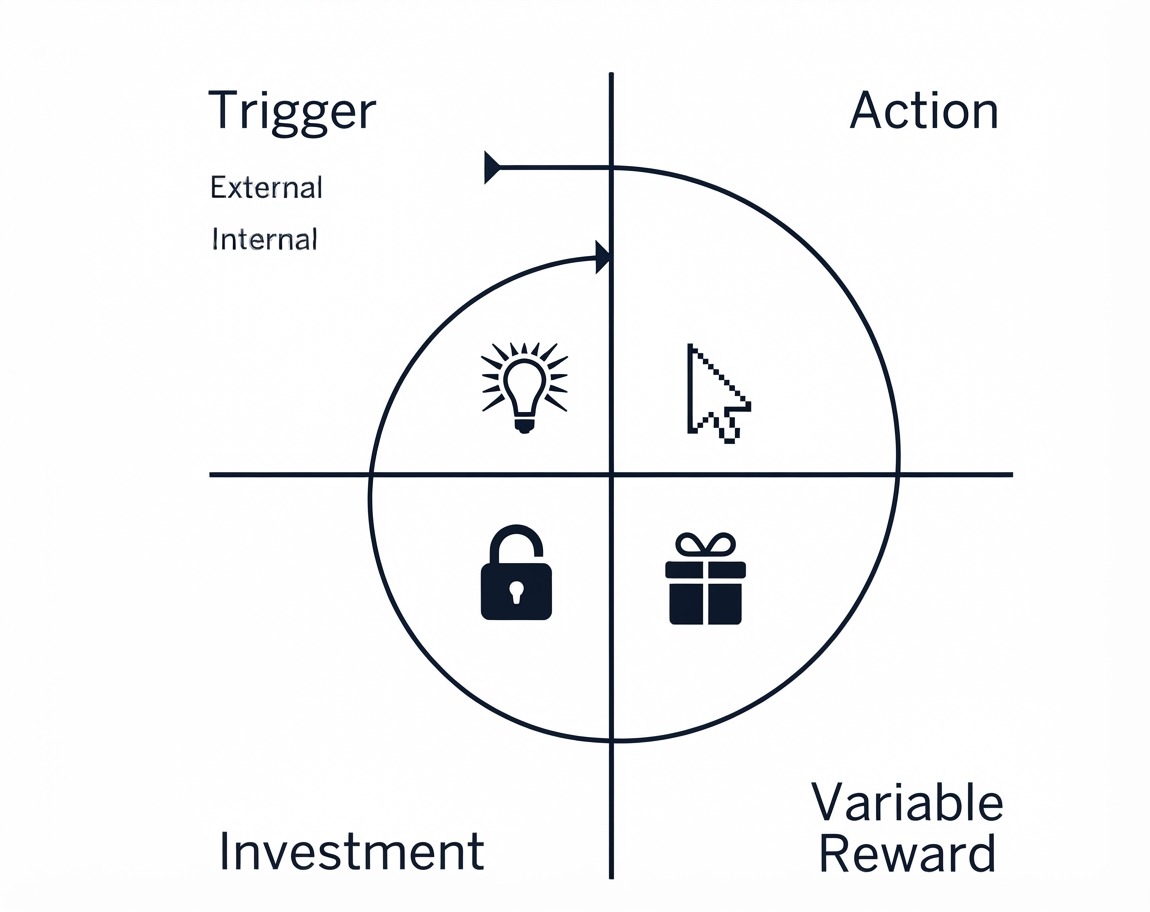
The 4 Phases of the Hook Model: Habit Formation
The model’s cycle consists of four sequential stages that continuously feed into one another:
1. Trigger
This is the spark that sets the behavior in motion. It comes in two types:
- External triggers: Elements of the digital environment that tell the user what to do (such as a push notification, an email, a banner, or a call-to-action link).
- Internal triggers: Emotional associations rooted in the user’s mind (for example, automatically opening Instagram when they feel bored, or searching for a technical solution when they feel frustrated).
2. Action
This is the behavior the user performs in anticipation of a reward. According to the principles of behavioral psychology and the Fogg model, for an action to occur there must be enough motivation, the ability to perform it (interface simplicity), and a clear trigger.
3. Variable Reward
This is the key phase that separates products that form habits from those that don’t. When a reward is predictable, the brain loses interest (hedonic adaptation). By introducing variable rewards (such as the uncertainty of discovering what’s in a social feed, community validation, or an unexpected financial benefit), dopamine is triggered and the desire to repeat the interaction increases dramatically.
4. Investment
This occurs when the user contributes something of value to the platform (time, data, effort, content, reputation, or personalization). This investment doesn’t seek immediate gratification, but rather increases the likelihood that the user will come back in the future (for example, saving settings, accumulating points, or creating favorites lists). Each investment in turn acts as a new, deferred external trigger.
Practical Application of the Hook Model in CRO and Growth
Although the model was originally conceived for large social media platforms and mass-market consumer apps, applying it to web conversion flows and digital products (SaaS, e-commerce) is extremely powerful:
- Reducing retention fatigue: It helps you understand why users complete a purchase once but never return, allowing you to design automated post-purchase flows that act as effective triggers.
- Onboarding optimization: Designing a sign-up process in which users quickly invest value in the platform (by setting up their profile or preferences) ensures that the cost of later abandonment is much higher (endowment effect).
- Smart incentive design: Replace boring, fixed discounts with variable reward dynamics that engage customers in a subtle and profitable way.
Ethics and Risks in Applying the Hook Model
Like any Behavioral Design discipline, building digital habits carries great responsibility. Dishonest use of this framework can lead to dark patterns or unwanted digital addiction. The goal of a sustainable Growth approach is to design experiences that provide real value to the user’s well-being while respecting their autonomy.